
Myrtle Beach Garage Door Guide
What Your Garage Door Is Telling You in Myrtle Beach
In Myrtle Beach, most garage doors date to the 1986-2006 building boom, and mild coastal humidity brings certain noises right on schedule. Here's why.
- Licensed & Insured
- Same-Area Service Calls
- Upfront Pricing
When to Get Help
Most of the housing stock in this part of Myrtle Beach went up between 1986 and 2006, with the bulk of it dating to right around 1995. That matters because torsion springs, openers, and rollers all have a working life measured in years and in cycles, not in how the door looks. If your house is part of that 1980s-90s wave that fills areas like Carolina Forest, Forestbrook, and Socastee, the hardware behind the door is now somewhere between 20 and 40 years old, and a new sound is rarely random.
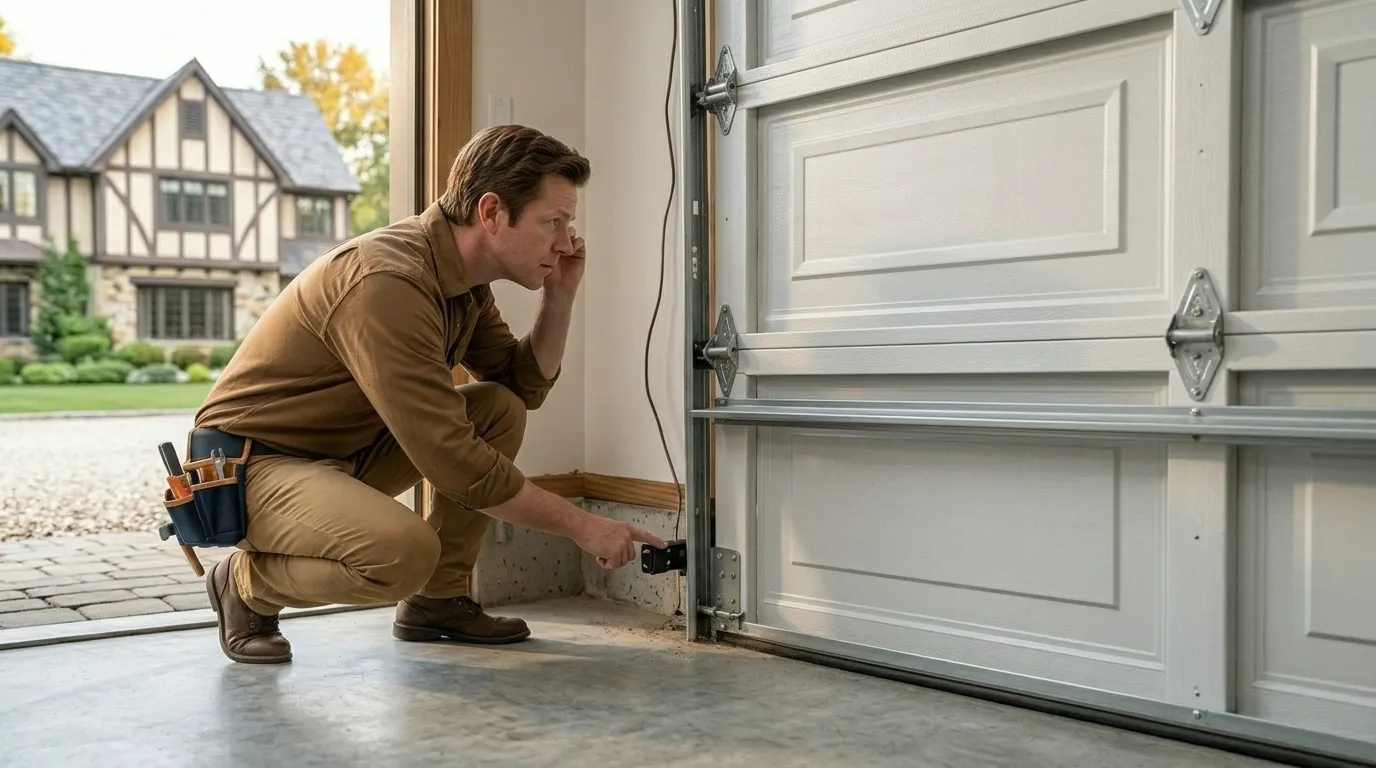
A rhythmic thump once a cycle usually means a flat spot on a roller, not urgent. A loud bang followed by the door refusing to lift is almost always a broken spring, and that one needs a call before you touch anything, since a wound torsion spring under tension can hurt someone who doesn't know how to release it.
A grinding or scraping sound that gets worse each time you open the door is worth a same-week look rather than a wait-and-see. The general rule: sounds that repeat and worsen are mechanical wear catching up with a door built during that same building boom, not something that fixes itself.
What to Check
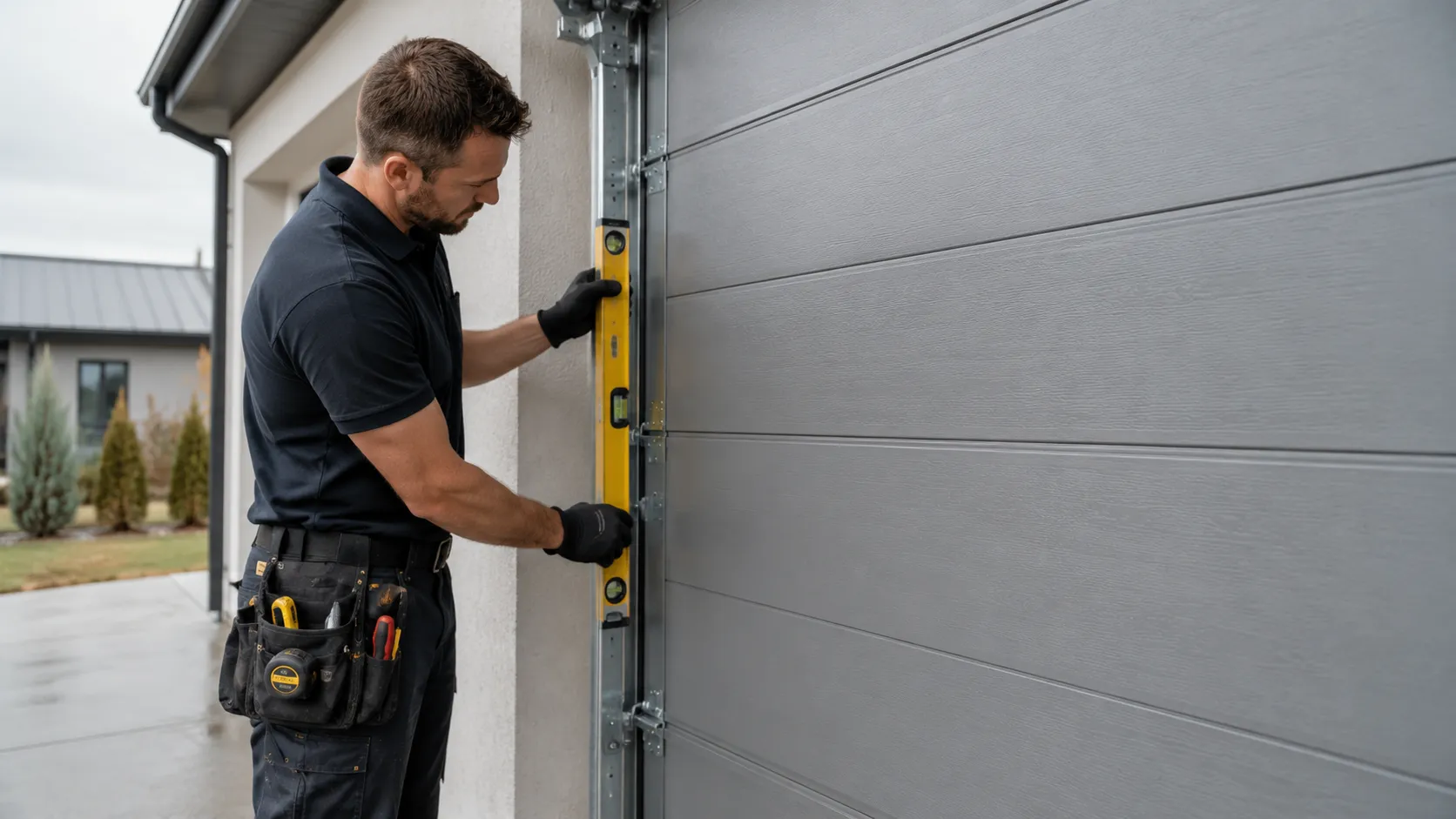
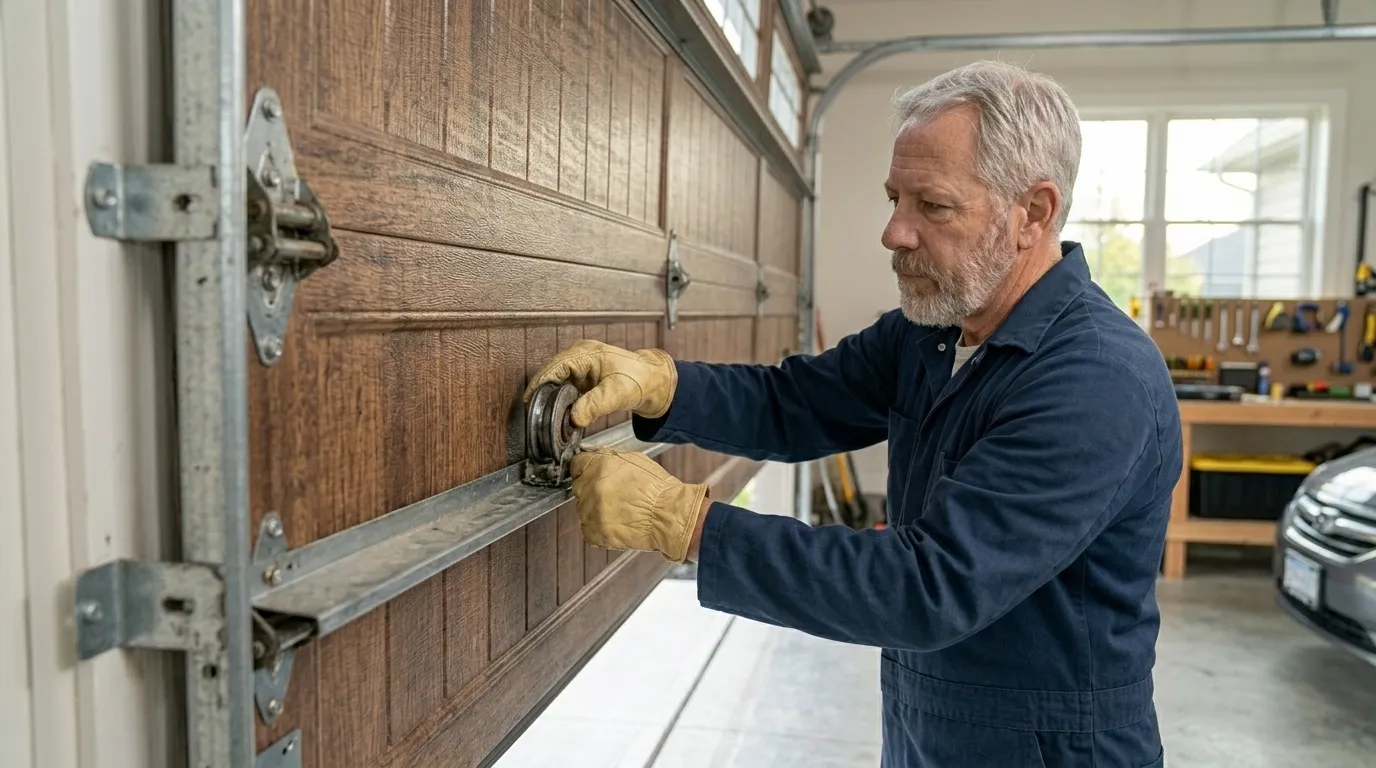
Before you call anyone, a few minutes with a flashlight tells you a lot. Look at the springs above the door - if you see a visible gap in the coil, stop opening the door by remote and use the manual release instead. Check the rollers where they sit in the track; a roller that looks worn on one side, or a track with a visible bend, explains a lot of the clunking and rattling homeowners hear.
Run a hand (door closed, power off) along the bottom hinges and the lift cable near the bottom bracket, looking for rust bloom on the metal. Given this area's mild climate with occasional freeze mornings, hardware that isn't kept lubricated tends to show surface rust faster than you'd expect in a drier inland climate, and rust on a cable is a different problem than rust on a hinge - one is cosmetic, one is a safety issue.
Listen for where the noise happens in the cycle. A noise only at the very top or bottom of travel usually points to the track or the limit settings on the opener.
A noise through the whole run points to springs, cables, or the opener's drive gear. That distinction saves a wasted trip and a wasted diagnosis fee.
The Problem
Across this service area's roughly 36,450 owner-occupied houses, a large share still run the torsion springs and openers that went in when the house was built, sometime in that 1986-2006 window. Springs are rated for a set number of open-close cycles, and once a house crosses the 20-year mark, plenty of those original springs are simply at the end of their rated life, regardless of how well they were maintained.
That's the pattern behind most of the noise calls we see in neighborhoods that share this building era: it isn't damage, it's schedule. A spring that lasted two decades doing exactly what it was built to do doesn't fail because of neglect - it fails because it's been wound and unwound tens of thousands of times.
With a median household income of $67,618 across the area, a full door and opener replacement is a real expense for most households, which is exactly why catching a warning noise early - before the spring snaps and the door drops - is worth the ten-minute inspection. We won't quote a repair price over the phone based on a description of a sound; too many different problems produce a similar noise, and a wrong guess costs you more than the visit.
What Local Conditions Do
This area sits in a mild climate band that still gets occasional freeze mornings, and that swing is harder on garage door hardware than steady heat or steady cold would be. Lubricant and metal that behave fine on a humid 70-degree day can stiffen overnight when temperatures drop, and that's often when an otherwise quiet door starts groaning on its first open of the morning.
Distance from the coast changes the picture too. Houses closer to Surfside Beach and Garden City sit in salt-tinged, humid air that speeds up rust on unpainted spring coils, track bolts, and hinge pins compared to houses further inland toward Conway. If you're out that way and you're hearing a squeak that wasn't there last summer, corrosion on the hinge pins is a reasonable first guess before you assume the opener itself is failing.
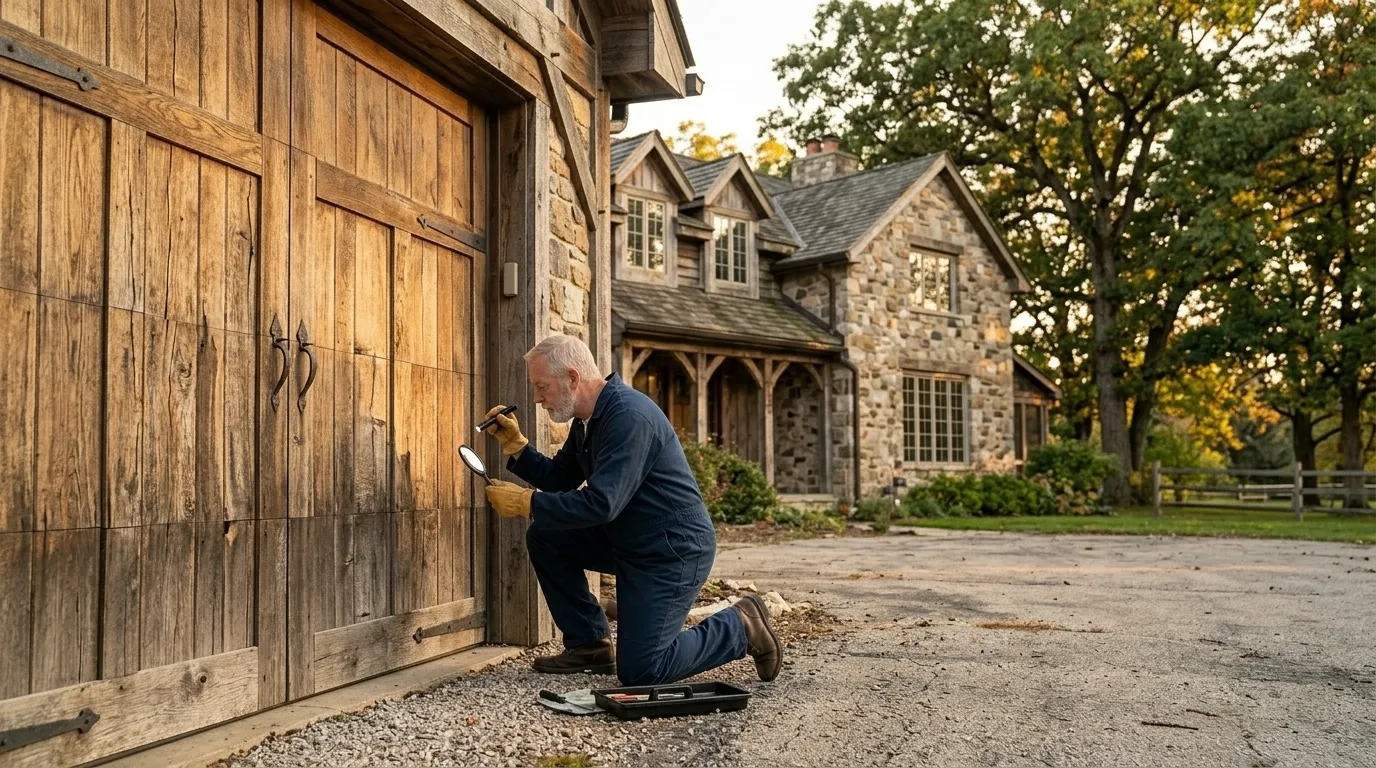
Humidity swings also affect wood-panel doors more than steel ones - panels can swell slightly and rub against the track guide, producing a scraping sound that has nothing to do with springs or cables at all. None of this means the door is broken. It means the same mild-but-humid, occasionally-cold conditions that make this stretch of coast pleasant to live in are also quietly working on the hardware year-round.
How We Can Help
Garage Door Repair
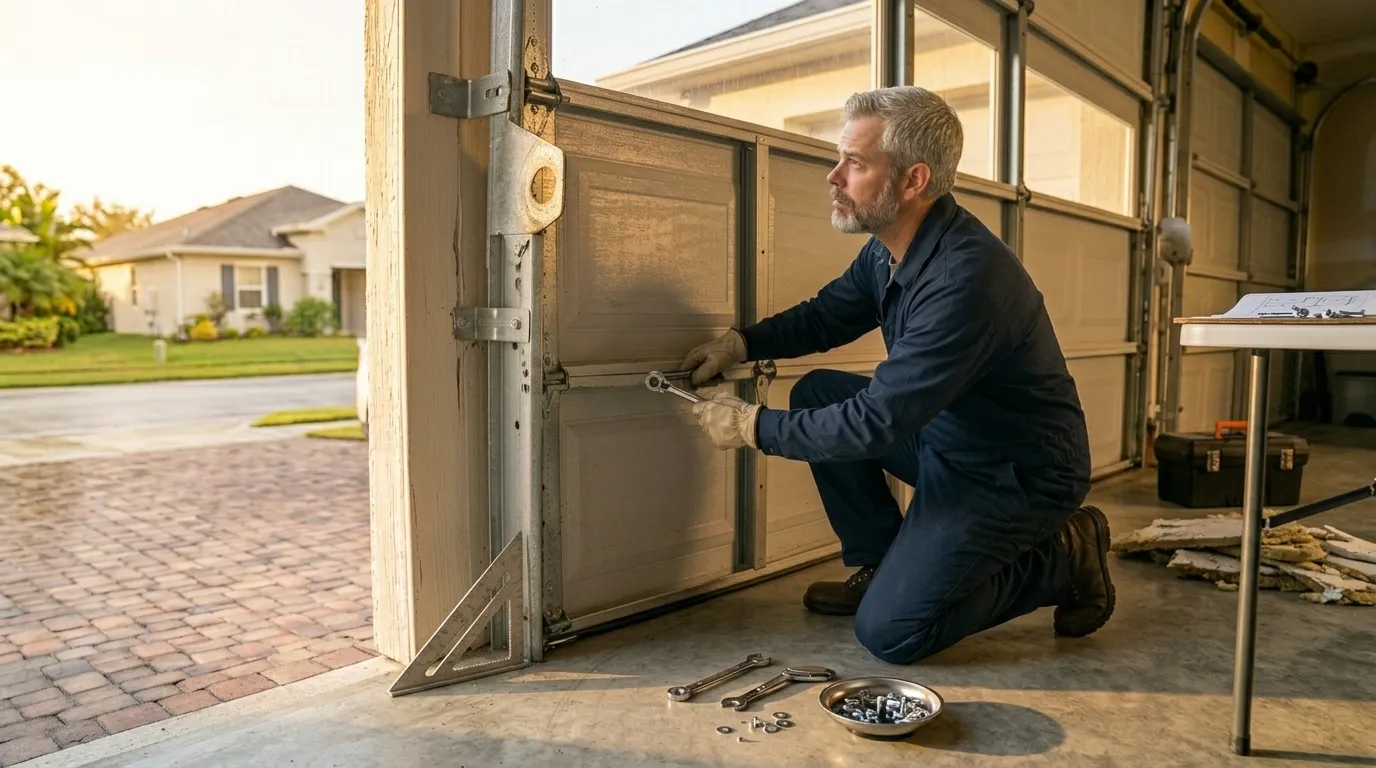
Springs, cables, tracks, rollers, and openers fixed by a tech who explains the problem before touching anything.
Learn more →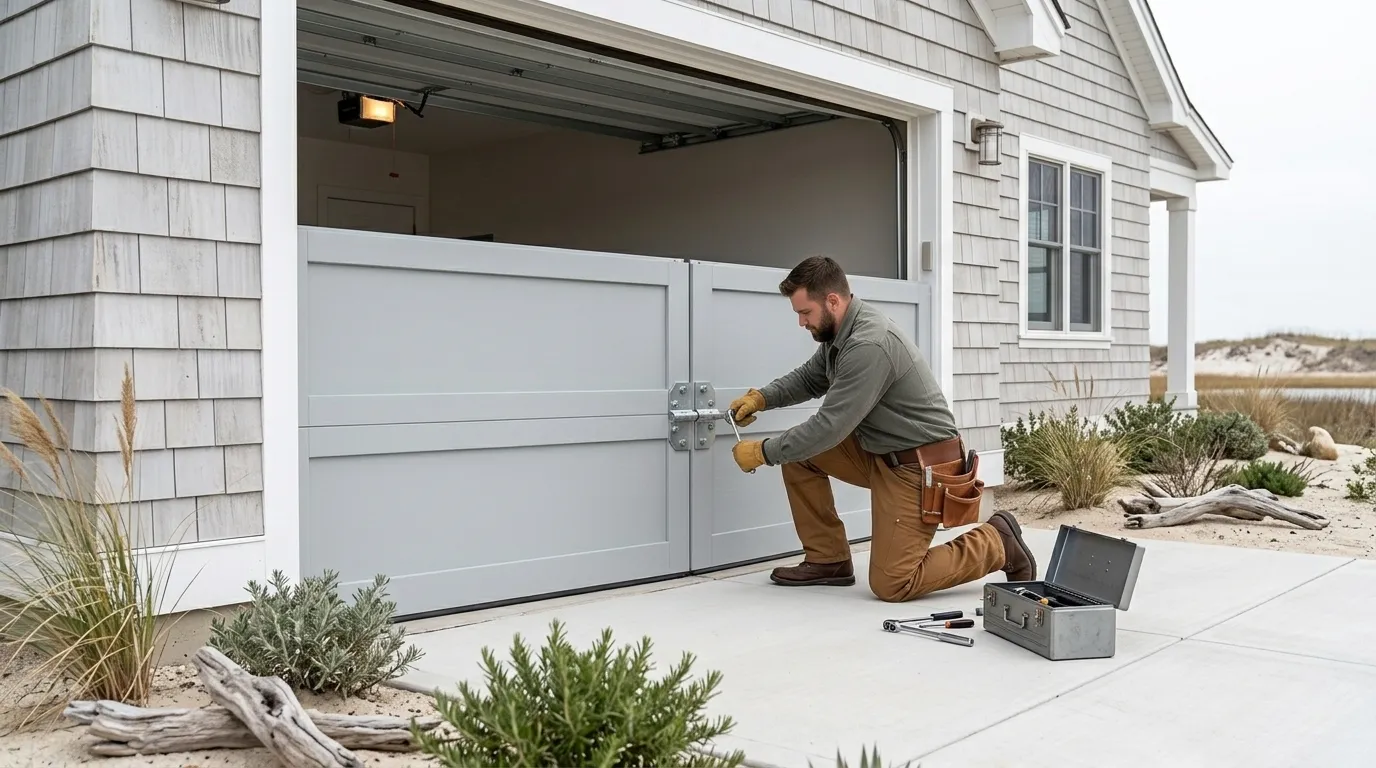
Garage Door Installation
New sectional doors sized and installed for the housing stock actually built in this area.
Learn more →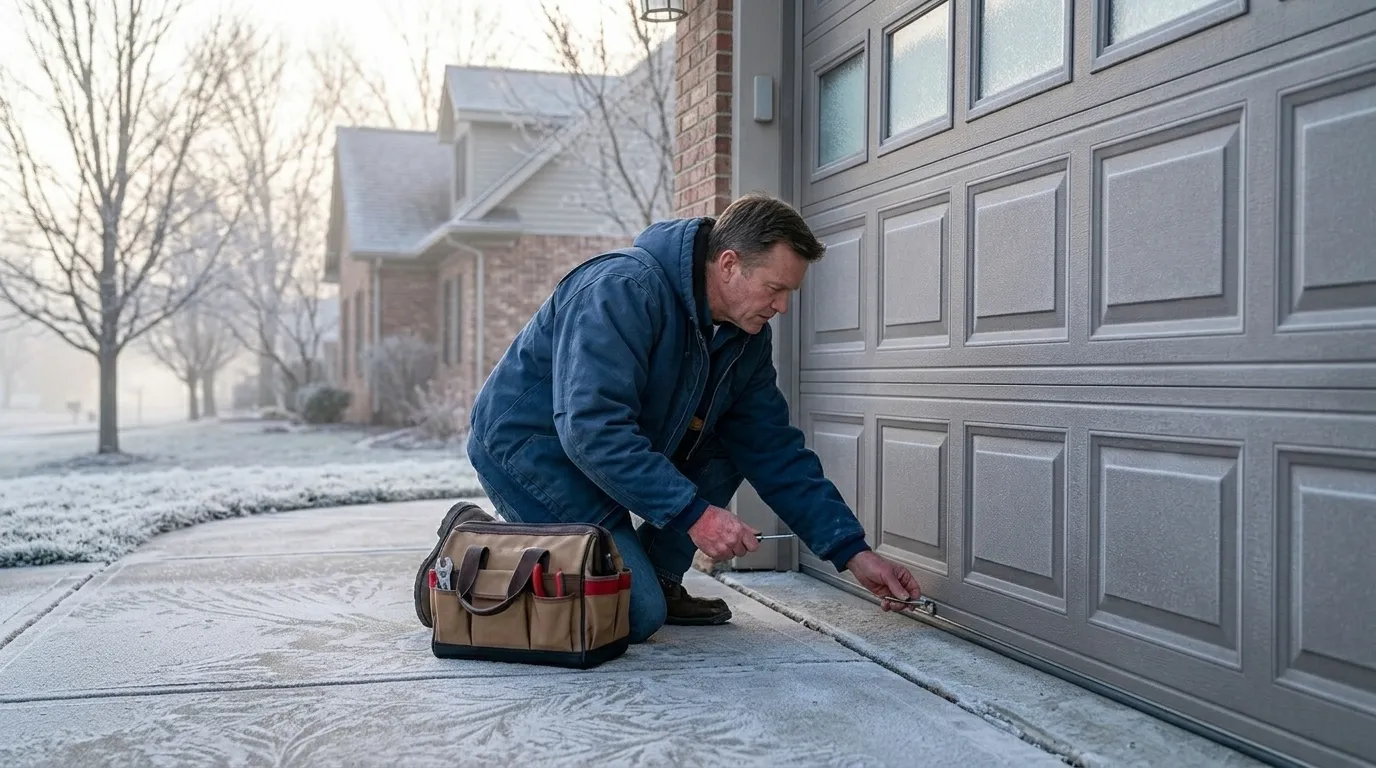
Garage Door Service
Tune-ups, lubrication, and safety checks that catch a small problem before it becomes a service call.
Learn more →Frequently Asked Questions
My garage door makes a loud bang and won't open - is that the spring?
Almost always, yes. A single loud bang followed by the door refusing to lift, or lifting only partway, is the signature of a broken torsion spring. Don't try to force it open with the opener or by hand - the door is now unbalanced and heavy. Use the manual release only if you need the car out, and call for the spring itself.
Why does my door only make noise on cold mornings?
This area gets occasional freeze mornings even though the overall climate is mild, and that swing stiffens lubricant and metal overnight. A door that's silent all afternoon can groan or squeak on the first open of a cold morning simply because the grease hasn't warmed up yet, not because anything is actually failing.
My house was built in the mid-1990s - should I expect the original spring to still be good?
Not necessarily. Torsion springs are rated by cycle count, not by calendar years, and a house from that 1986-2006 building era has likely put its original spring through decades of daily use. Plenty of springs from that period are at or past their rated life even if they look fine sitting still.
Does living closer to the beach make a difference for my door?
It can. Houses nearer Surfside Beach or Garden City sit in more salt-humid air than houses further inland toward Conway, and that speeds up rust on unpainted spring coils, track bolts, and hinge pins. If you're in one of those areas and hearing new squeaking, corrosion is a reasonable first thing to check.
Get Started
Have a Door That Needs a Second Opinion?
Call and describe what it is doing - we will tell you what it likely is.