Myrtle Beach, SC
Garage Door Repair in Surfside Beach
Garage Door Repair for Surfside Beach's 1986-Era Doors
Surfside Beach garage doors mostly date to 1986 and later - steel sectional doors on extension or early torsion hardware. We drive the 9 miles from Myrtle Beach to fix them.
- Licensed & Insured
- Same-Area Service Calls
- Upfront Pricing
What Happens When You Call
-
1
Call or Request a Quote
Tell us what the door is doing and roughly how old the house is - that alone points us toward the likely part before a truck leaves.
-
2
On-Site Diagnosis
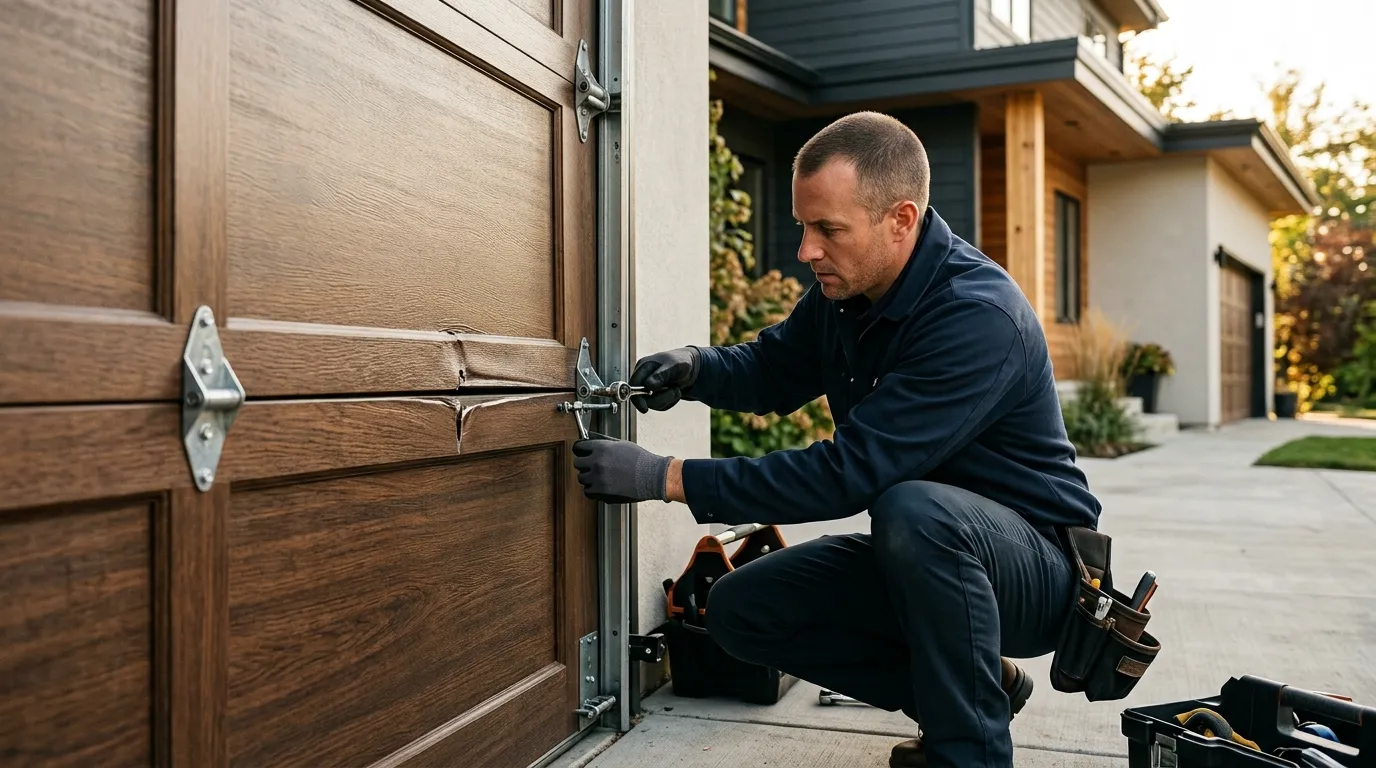
A tech checks the spring, cables, tracks, and opener in person and tells you plainly what is actually wrong.
-
3
Straight Price, No Surprises
You get a number before any work starts. It covers parts and labor, nothing added after the fact.
-
4
Fixed the Same Visit
Most repairs are done in one trip. If a part needs sourcing, we tell you that upfront instead of guessing.
What the Repair Takes
Surfside Beach's housing mostly dates from 1986 onward, which puts most garages here a full generation newer than the older pockets closer to the coast. That means steel sectional doors, usually in the standard 16-by-7 double or 9-by-7 single sizes, hung on galvanized track with either extension springs overhead or an early torsion setup mounted on the header above the opening. Panels from this era are raised-panel steel, non-insulated or single-layer, which is common for the region's mid-1980s and 1990s builds.
None of it is exotic. It's straightforward hardware that a lot of shops still stock parts for, which is the good news. The less good news is that after close to four decades of coastal air moving through, springs lose tension unevenly, track brackets work loose from the framing, and the steel skins pit at the bottom panel first.
A repair on a door this age is rarely a single fix - pull one worn part and you usually find the roller bearings and the bottom seal need attention in the same visit. We plan for that rather than quoting a one-line fix and finding the rest once we're under the door.
The Complications
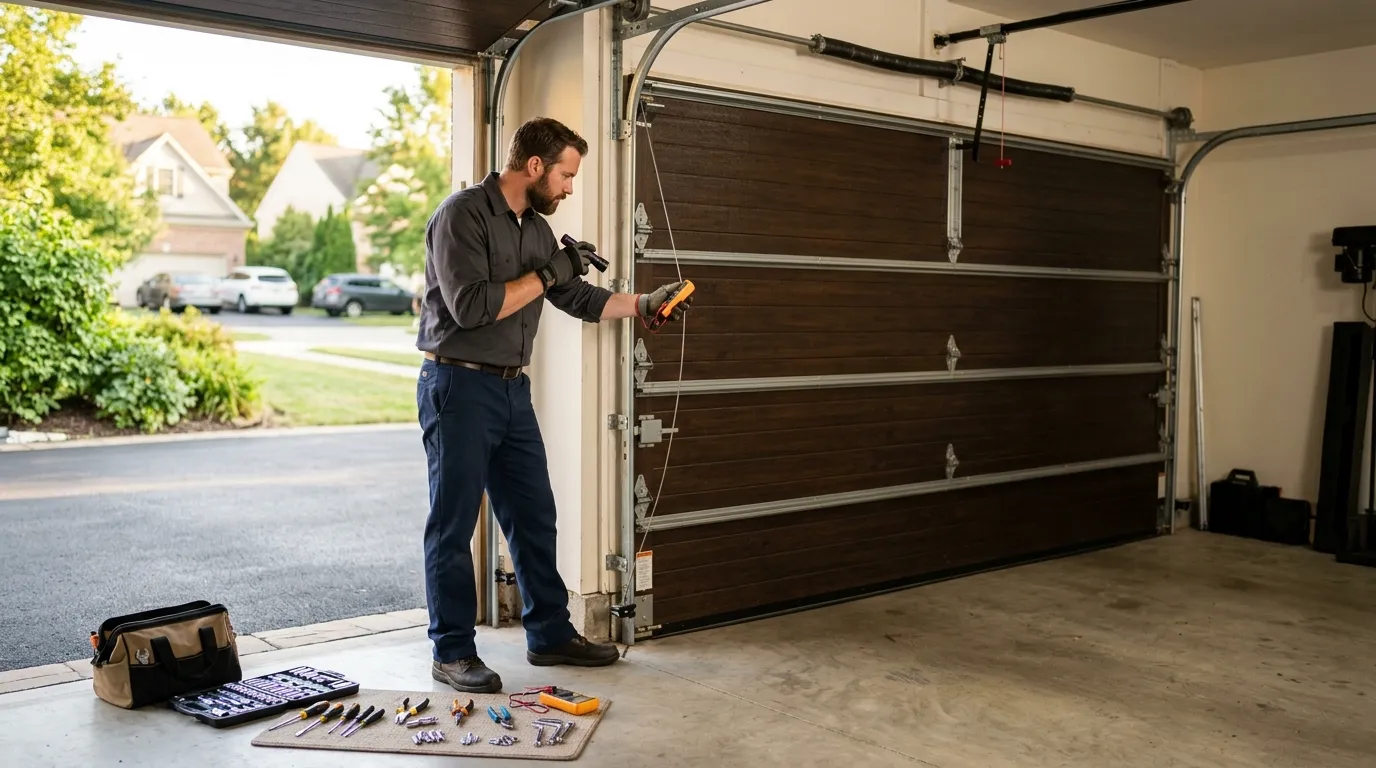
A door built in the mid-1980s or later doesn't have the completely obsolete hardware you'd find on something from the 1960s, but it has its own set of headaches. Extension spring setups from that period often lack the safety cables that later code required, so a snapped spring can whip the cable loose instead of just going slack - that's a real hazard, not a scare line. Torsion setups from the same years sometimes used a single spring sized for the door's original weight, and if a homeowner has since added a heavier insulated replacement panel, that single spring is now undersized and wearing out faster than it should.
The climate here is mild with only occasional hard freezes, so we're not dealing with ice-locked tracks the way colder regions do, but salt-laden humidity off the coast still corrodes springs, hinges, and rollers faster than it would inland. The honest limitation: if the door itself is original steel from the 1980s and the bottom panel has rusted through, we'll tell you plainly that patching it isn't worth the labor - replacement panels for doors that old are frequently discontinued, and we're not going to bill you to chase a part that no longer exists.
What You Are Seeing
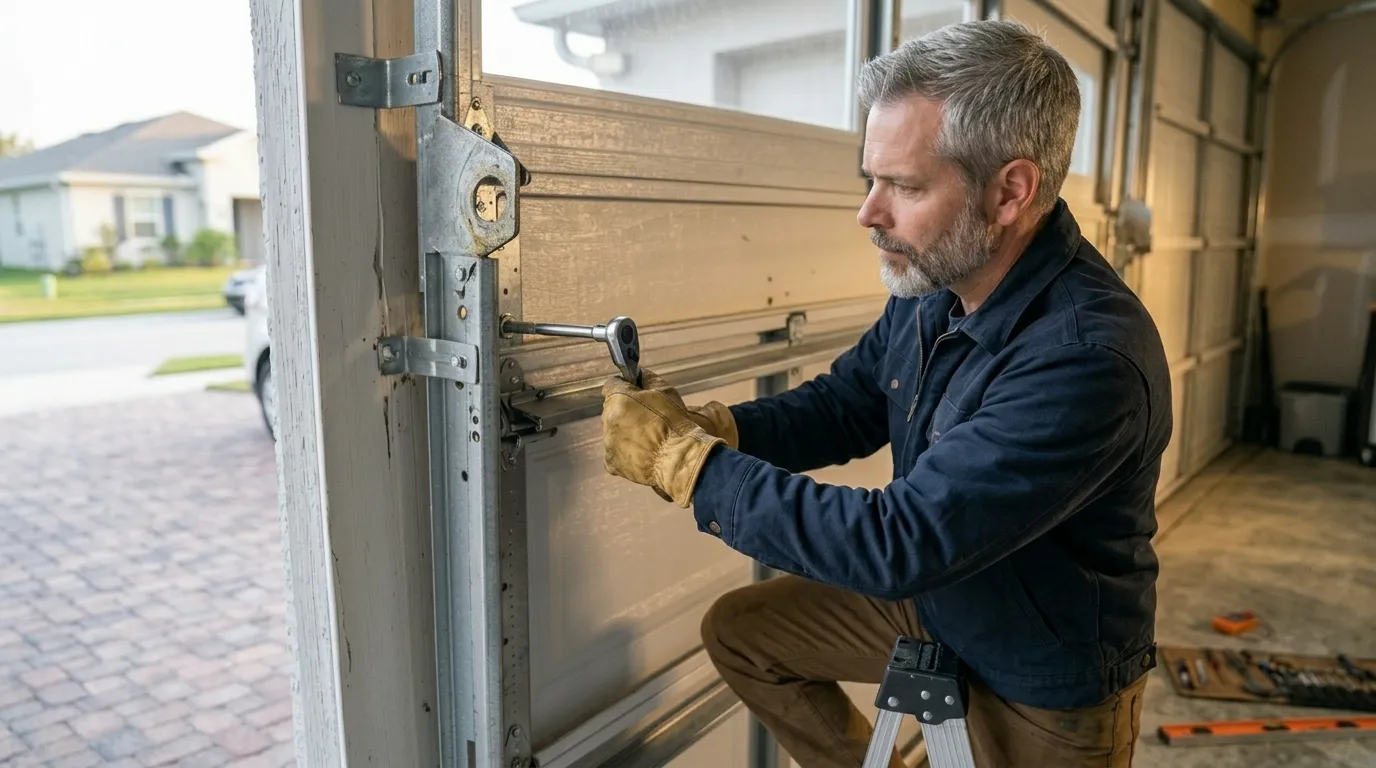
The door won't fully close and reverses partway back up - usually a misaligned photo-eye sensor or a track that's bowed from age. A loud bang followed by the door refusing to move at all is almost always a broken spring, extension or torsion, and it's not something to force open with the emergency release cord unless you know what you're doing. A door that closes crooked, dropping faster on one side, points to one spring or cable failing while the other still holds - dangerous because the door can come down unevenly on a car or a person underneath.
Grinding or scraping as the door travels usually means the rollers have worn out of round, common once a door built in the late 1980s or 1990s hits its third decade of daily cycles. If the opener runs but the door doesn't move, check the sensor at the trolley before assuming the motor's shot - it's a five-minute fix more often than a replacement job.
What You Pay
We don't have a published price list for Surfside Beach calls specifically, and we're not going to make one up. What we can tell you is that this area's median household income runs around $74,202, higher than some of the other pockets we cover from Myrtle Beach, and that doesn't change what a spring or a roller costs - parts pricing is the same across the whole service area.
What does vary is the drive: Surfside Beach sits about 9 miles from our base in Myrtle Beach, so travel is a factor in any quote you get. We'll always give you a number before we start work, not after.
What Is on the Truck
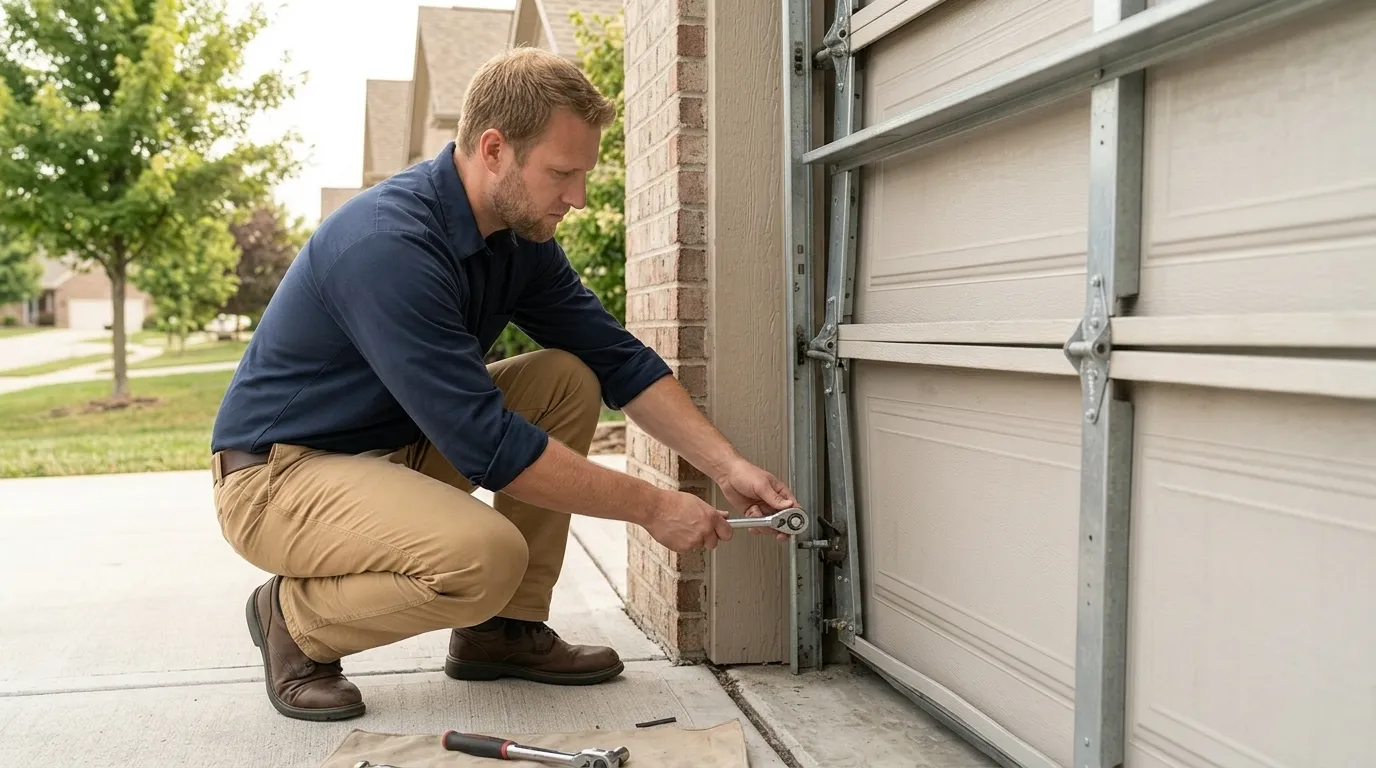
Given how many homes in Surfside Beach and the surrounding area went up between 1986 and the mid-2000s, we carry the parts that fit that window: standard torsion springs in common wire sizes, extension spring kits with safety cables to bring older setups up to a safer standard, galvanized rollers, and track sections sized for both 16-by-7 and 9-by-7 openings. We also carry photo-eye sensor kits, since alignment issues on doors this age are one of the most common calls we get. What we don't carry is a full stock of original 1980s panel skins - if your door's steel has rusted through and needs a matching discontinued panel, that's a special-order part, and we'll say so up front rather than stringing out a repair that should be a replacement.
How Long You Are Without the Door
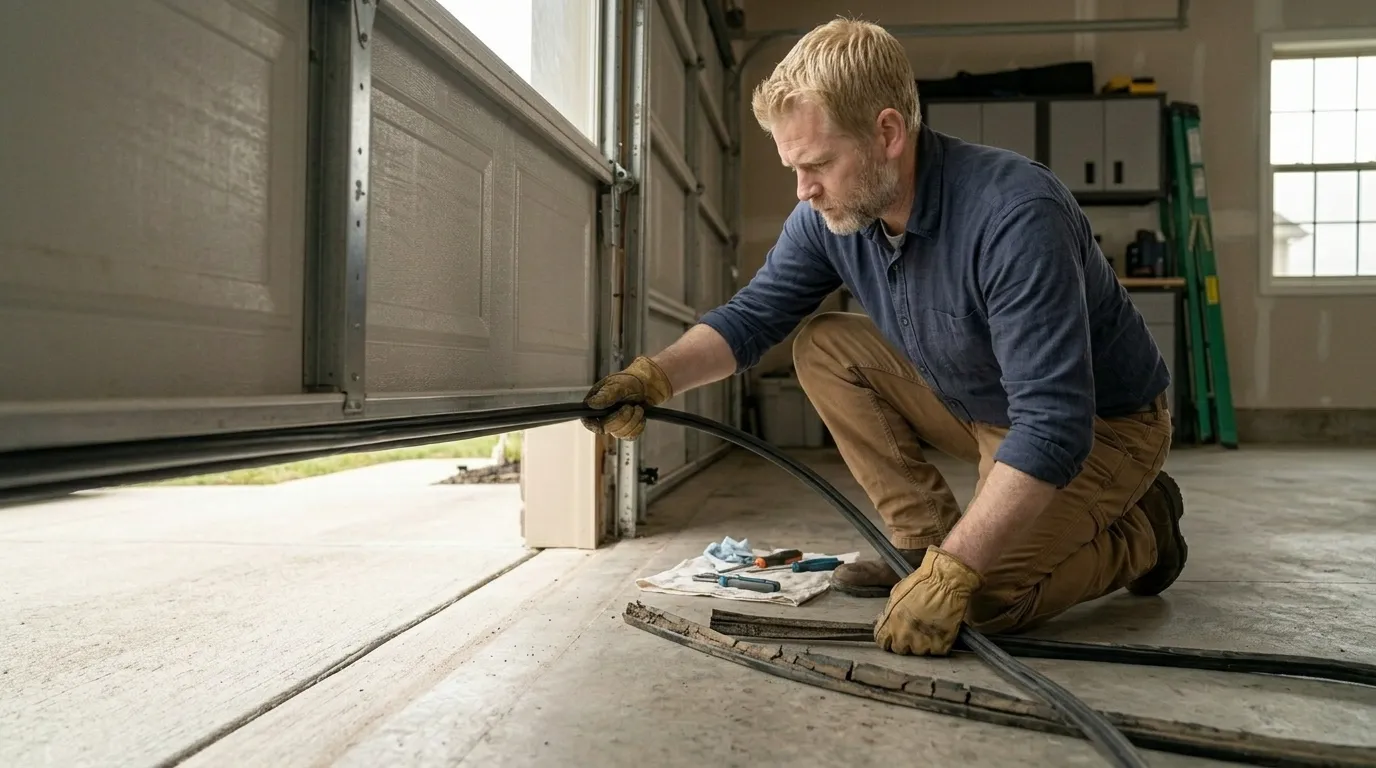
Most single-issue repairs - a spring, a set of rollers, a sensor alignment - get the door back in operation the same visit once we're on site, since the parts for doors of this era are common stock, not special order. Where it runs longer is if the call turns up a second problem once we're under the door, which happens more often on doors past 30 years old, or if a part turns out to be one of the few we don't carry on the truck and needs to come from a supplier. We won't guarantee a same-day fix before we've actually looked at the door, but for the straightforward torsion or extension spring jobs that make up most of what we see out this way, it's usually one trip.
Talk to a Surfside Beach Technician First
Describe what the door is doing and get a straight answer on what it likely needs.
Other Garage Door Services in Surfside Beach
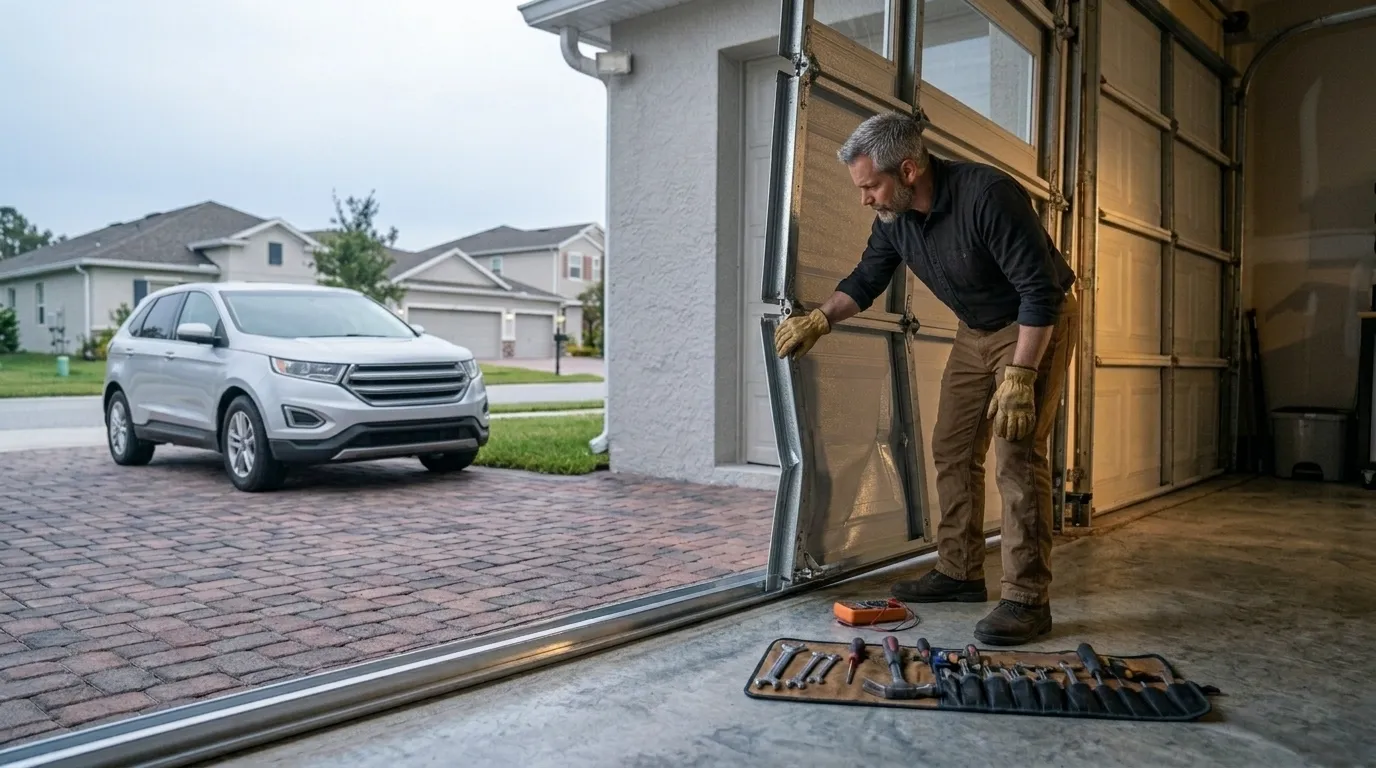
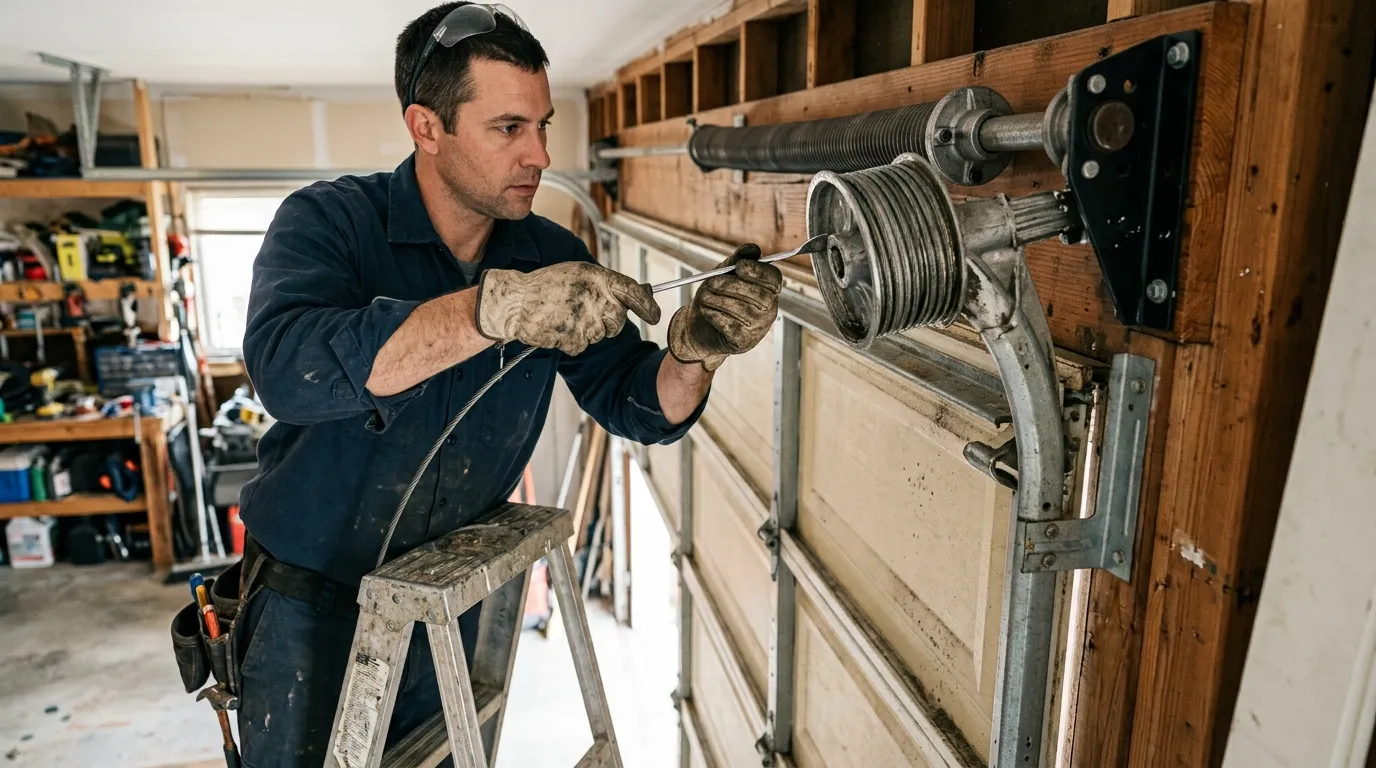
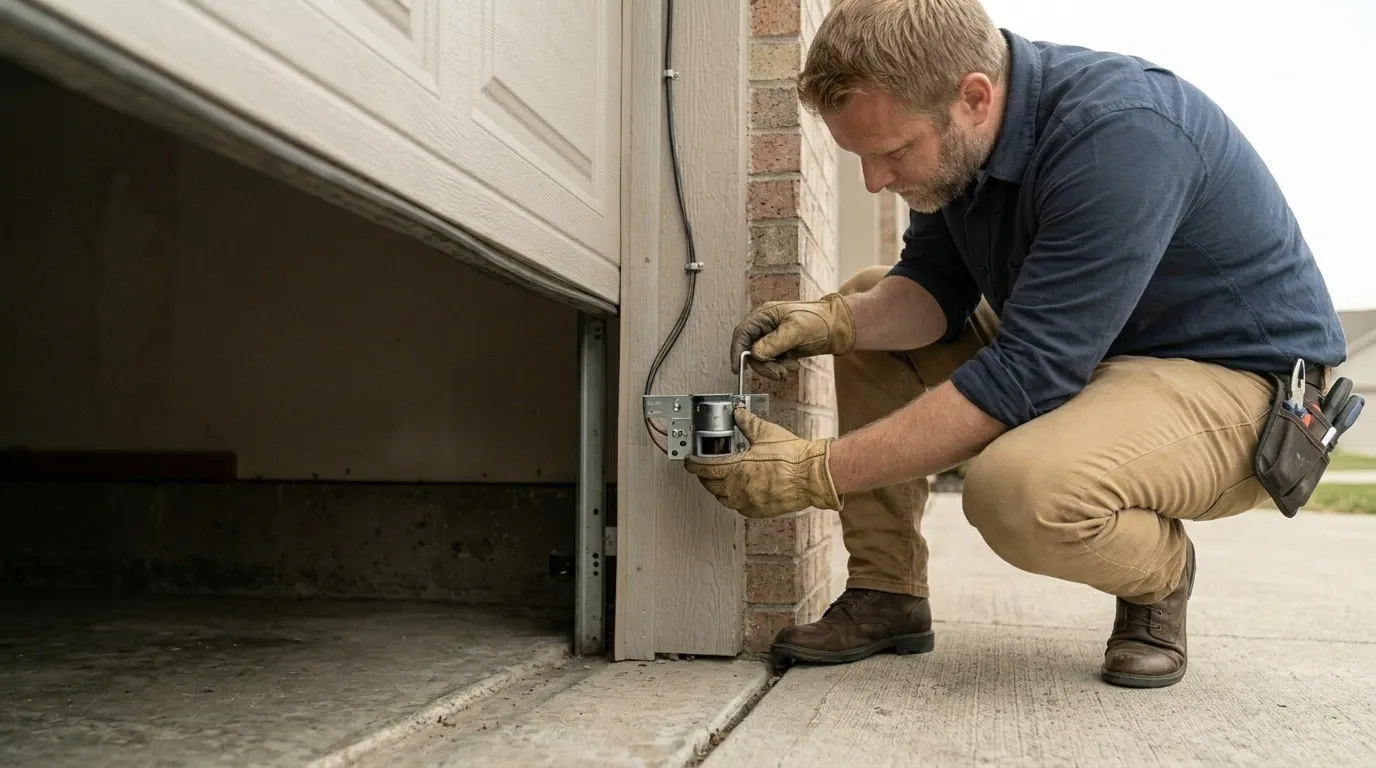
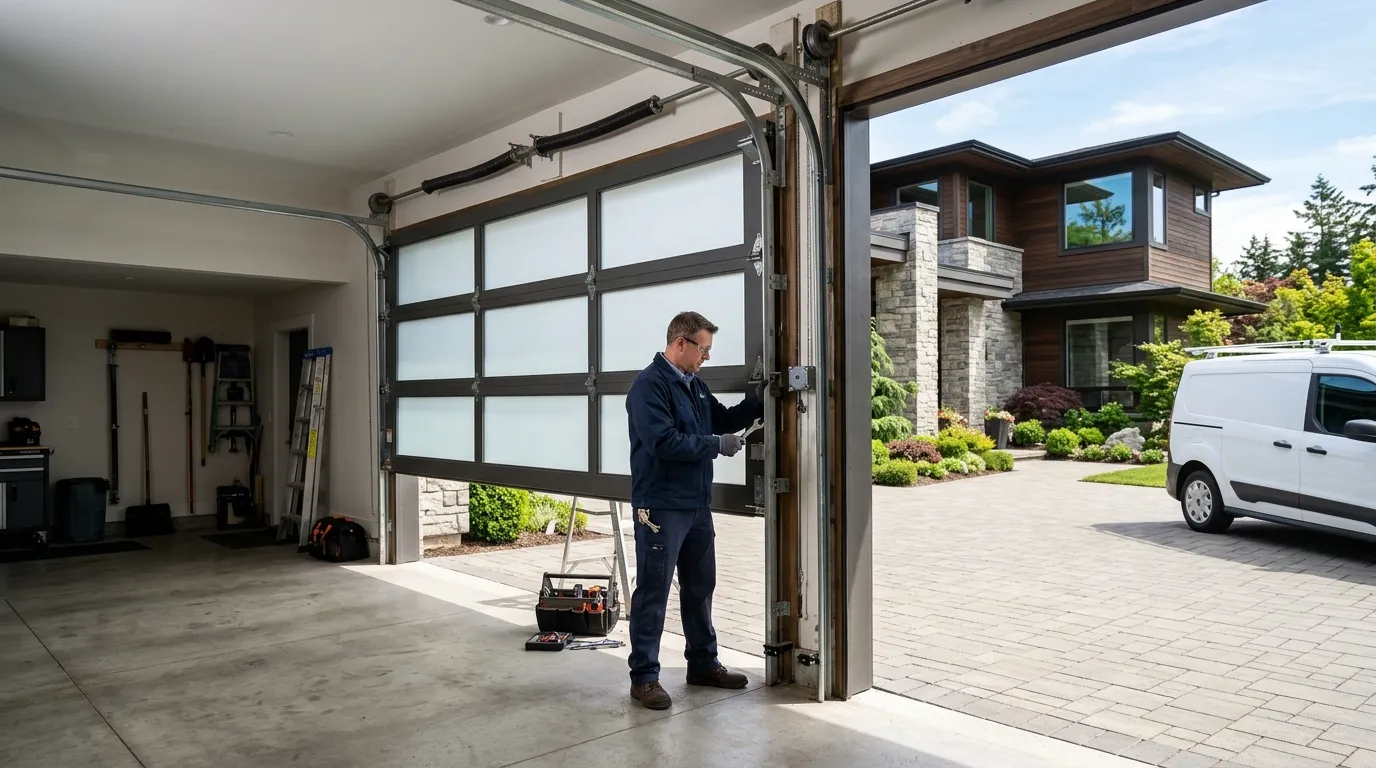
Recent Work in Surfside Beach
A look at jobs our crew has been on nearby.
Why Surfside Beach Calls Us
Frequently Asked Questions
Are Surfside Beach garage doors older or newer than the rest of the Myrtle Beach area?
Generally newer. Surfside Beach's median year built is 1986, and most of the surrounding service area's housing runs from the 1980s and 1990s too, so the doors and hardware here tend to be standard steel sectional units on torsion or extension springs rather than the older, harder-to-source setups found in older neighborhoods.
Do you have a shop or truck based in Surfside Beach?
No. We're based in Myrtle Beach and drive out to Surfside Beach, about 9 miles away, for every call. We don't operate a branch or depot in Surfside Beach itself.
Why did my garage door spring snap with no warning?
Torsion and extension springs are rated for a set number of open-close cycles, usually somewhere around 10,000. A door installed in the late 1980s or 1990s has likely worked through that many cycles years ago, so a sudden snap after decades of use isn't unusual - it's the spring reaching the end of its life, not a sign of something else being wrong.
Is it worth repairing an original 1980s garage door instead of replacing it?
Depends on what's failed. Springs, rollers, cables, and sensors are all repairable on an older door. But if the steel panel itself has rusted through, replacement skins for doors that old are often discontinued, and at that point buying a new door usually costs less than chasing down a part that no longer exists.
Need Garage Door Repair in Surfside Beach?
Call now for straight answers on cost and timing.